Many patients in Bradenton and Sarasota wonder:
“If professional whitening works better, why does everyone online rave about Crest White Strips? And why do my teeth hurt after whitening?”
This is the classic sensitivity battle. Understanding the differences helps protect your enamel and keep your smile bright without unnecessary pain.
How Professional Whitening Works
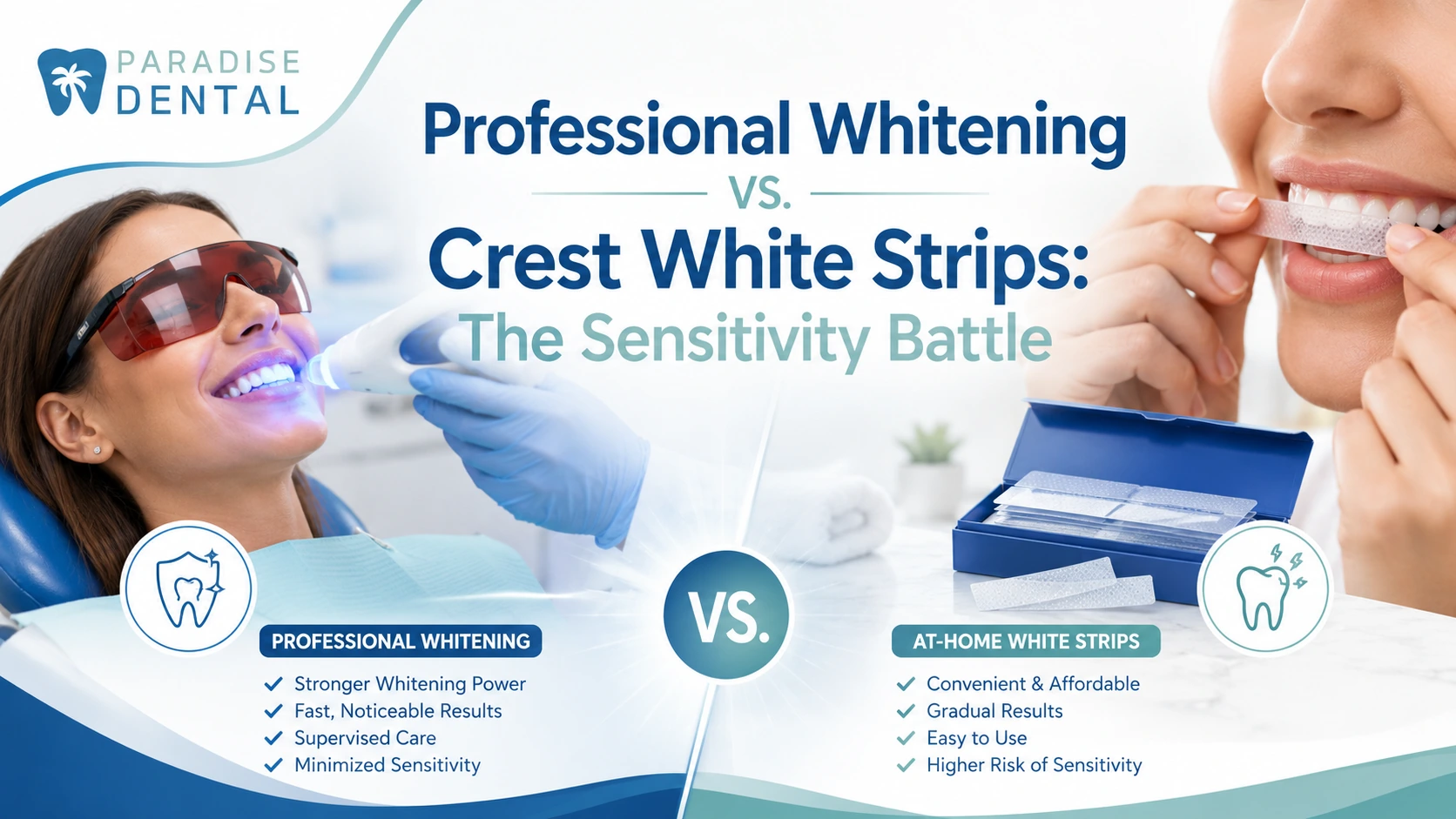
Professional whitening treatments at a dental office use higher-concentration peroxide gels, applied under controlled conditions.
Advantages include:
- Custom trays or in-office application that minimize gum exposure
- Stronger peroxide for faster, more predictable results
- Supervision by a dentist to adjust concentration for sensitive teeth
Patients often notice a significant difference after a single in-office session, or over a take-home plan that is monitored for enamel safety.
How Crest White Strips Work
Crest White Strips use over-the-counter peroxide gels, usually lower in strength.
Advantages include:
- Convenience: use at home
- Affordable upfront cost
- Moderate whitening for mild surface stains
Limitations:
- One-size-fits-all application, which can cause uneven coverage or gum irritation
- Limited strength — multiple applications over weeks are often needed for noticeable results
- Less control for patients with sensitive teeth
Why Sensitivity Happens
Both professional whitening and strips can cause sensitivity, but the causes differ slightly:
- Peroxide penetration: Whitening chemicals reach the inner layers of enamel and dentin, which can irritate nerve endings.
- Enamel condition: Thinner enamel, cracks, or exposed dentin increase sensitivity.
- Application method: Ill-fitting trays or strips rubbing on gums and teeth can amplify discomfort.
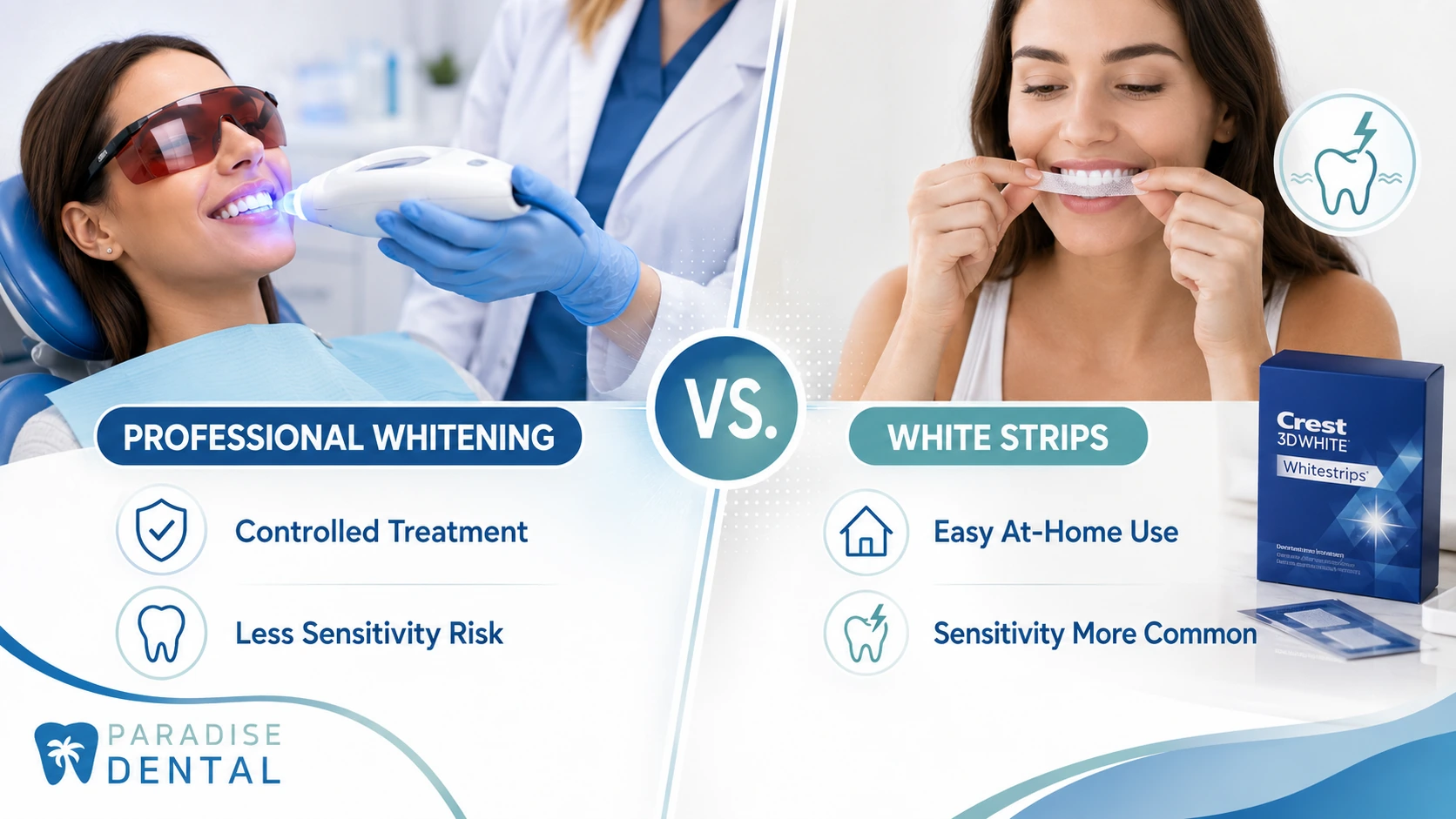
For Crest White Strips, overuse or improper placement can lead to burning gums or sharp tooth pain. For professional whitening, sensitivity is often temporary and managed proactively with desensitizing gels, modified application times, or gradual concentration increases.
Tips to Reduce Sensitivity
- Use a soft-bristled toothbrush and fluoride toothpaste
- Avoid acidic foods and drinks around whitening sessions
- Consider desensitizing treatments prescribed by your dentist
- For home kits, follow timing and placement instructions carefully
- Communicate with your dentist about previous sensitivity history
Bottom Line: Predictability vs. Convenience
- Professional whitening: Higher cost, stronger results, dentist supervision, usually lower long-term sensitivity when done correctly.
- Crest White Strips: Convenient and cheaper, lower strength, higher risk of uneven results or gum irritation if used incorrectly.
At Paradise Dental, Dr. Jeffrey Martins helps patients choose a whitening method based on:
- enamel thickness
- sensitivity history
- existing restorations
- desired speed and outcome
Because whitening should enhance confidence, not create new pain.
Professional supervision often wins the sensitivity battle especially for patients with thin enamel, restorations, or a history of post-whitening discomfort.