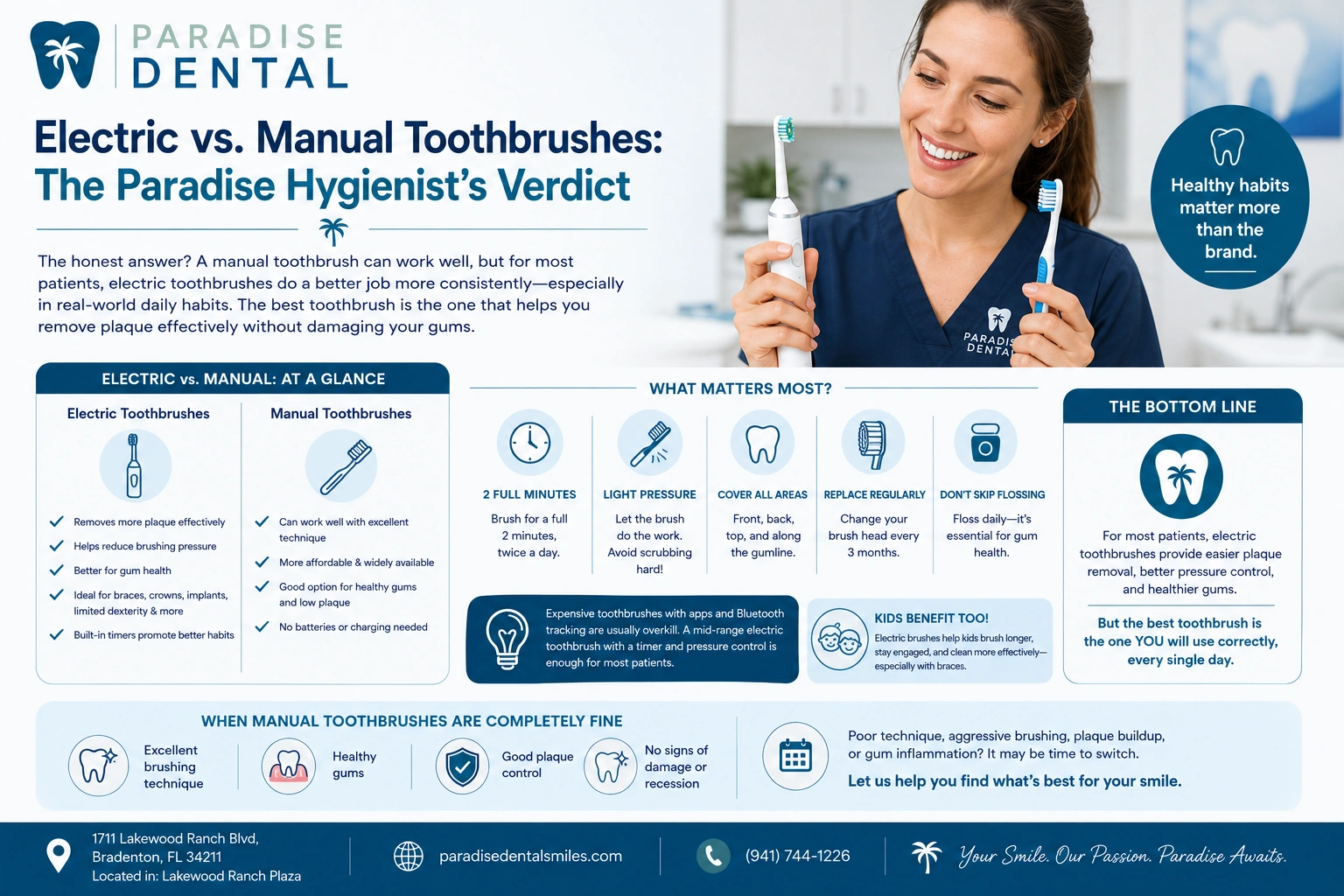
Patients ask this question constantly:
“Do I really need an electric toothbrush, or is that just marketing?”
The honest answer is:
A manual toothbrush can absolutely work well.
But for most patients, electric toothbrushes do a better job more consistently especially in real-world daily habits.
That does not mean everyone needs a $300 smart toothbrush with Bluetooth tracking and an app reminding you to brush your molars.
But it does mean many patients in Bradenton and Lakewood Ranch clean their teeth more effectively after switching to electric.
The important question is not:
“Which toothbrush is technically best?”
It is:
“Which toothbrush helps you remove plaque consistently without damaging your gums?”
First: Technique Matters More Than the Brush Itself
A great electric toothbrush used poorly can still leave plaque behind.
And a patient with excellent technique can absolutely maintain healthy teeth with a manual toothbrush.
This is important because marketing often oversimplifies the issue.
The real-world problem is that most patients:
- brush too hard,
- rush,
- miss areas,
- angle incorrectly,
- or do not brush long enough.
Electric toothbrushes help compensate for those habits.
That is where the biggest advantage usually comes from.
Why Hygienists Often Prefer Electric Toothbrushes
At Paradise Dental, hygienists commonly notice that patients using quality electric toothbrushes tend to have:
- less plaque buildup,
- healthier gums,
- less aggressive brushing damage,
- and improved consistency.
Especially for patients with:
- bleeding gums,
- early gum disease,
- braces,
- crowns,
- implants,
- veneers,
- or limited dexterity,
Electric brushes can make a meaningful difference.
The oscillating or sonic movement simply removes plaque more efficiently for many people.
The Biggest Problem With Manual Brushing: Pressure
This surprises many patients.
People often think:
“If I scrub harder, my teeth get cleaner.”
Usually the opposite happens.
Aggressive manual brushing can contribute to:
- gum recession,
- enamel wear,
- root exposure,
- and sensitivity.
Dentists in Florida see this constantly especially in adults who have brushed aggressively for decades.
Electric toothbrushes with pressure sensors help reduce this problem significantly.
That matters because receding gums do not grow back naturally.
Sonic vs. Oscillating Electric Toothbrushes
Patients often ask whether Sonicare-style brushes or Oral-B rotating brushes are better.
For most patients, either can work very well.
The difference usually matters less than:
- brushing consistency,
- pressure control,
- replacing brush heads,
- and actually brushing for two full minutes.
That said:
- Sonic brushes often feel gentler
- Oscillating brushes sometimes remove plaque slightly more aggressively
Some patients strongly prefer one sensation over the other.
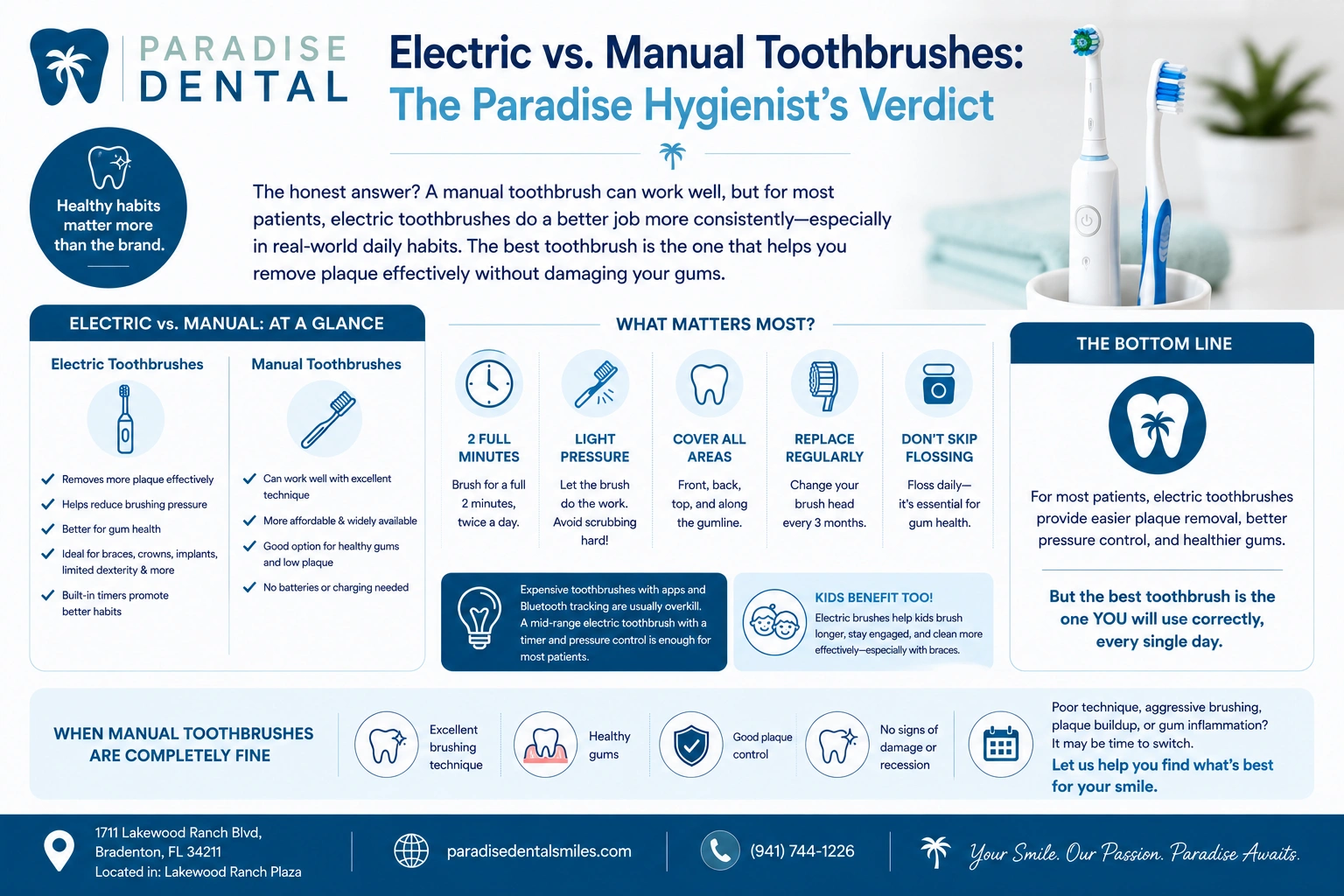
The best toothbrush is often the one the patient will actually use correctly every day.
When Manual Toothbrushes Are Completely Fine
This is important.
Not every patient needs an electric toothbrush.
A manual toothbrush may work perfectly well if:
- brushing technique is excellent,
- gums are healthy,
- plaque control is good,
- and no damage is occurring.
Some patients maintain excellent oral health manually for decades.
A good hygienist should be honest about that.
The recommendation changes when patients consistently struggle with:
- plaque buildup,
- gum inflammation,
- recession,
- staining,
- or brushing too aggressively.
Expensive Toothbrushes Are Often Overkill
This is where many patients waste money unnecessarily.
You do not usually need:
- AI brushing maps,
- Bluetooth coaching,
- or premium subscription toothbrush systems.
For most patients, a mid-range electric toothbrush with:
- a timer,
- soft bristles,
- and pressure control
is more than enough.
That does not automatically mean the most expensive toothbrush cleans better.
Kids Often Do Better With Electric Brushes Too
Parents in Lakewood Ranch and Bradenton often notice brushing battles improve with electric brushes.
Many kids:
- brush longer,
- stay more engaged,
- and clean more effectively
with built-in timers and movement assistance.
Especially for children with braces, electric brushes can make hygiene significantly easier.
What About Whitening Toothbrushes?
Most “whitening” toothbrush claims are really about stain removal.
A toothbrush itself does not chemically whiten teeth.
Some whitening brush heads are more abrasive, which can help remove surface stain but may also increase sensitivity if overused aggressively.
This is where balance matters.
The goal is plaque removal not scrubbing enamel away.
Toothbrushes Matter Less Than Daily Habits
This is the part patients sometimes do not want to hear.
The biggest factors affecting oral health are still:
- brushing consistently,
- flossing,
- diet,
- dry mouth,
- regular cleanings,
- and managing grinding or gum disease early.
An expensive toothbrush cannot compensate for:
- constant soda intake,
- skipping flossing,
- or months of plaque buildup.
So What Is the Paradise Hygienist Verdict?
For most patients, electric toothbrushes provide:
- easier plaque removal,
- better pressure control,
- healthier gums,
- and more consistent brushing habits.
That is why hygienists recommend them so often.
But a manual toothbrush is not automatically “wrong” if:
- technique is excellent,
- gums are healthy,
- and no damage is occurring.
At Paradise Dental in Bradenton, Dr. Jeffrey Martins and the hygiene team focus less on pushing specific products and more on helping patients understand:
- whether their current brushing is actually working,
- where inflammation or wear is developing,
- and what changes would realistically improve long-term oral health.
Because the best toothbrush is not the trendiest one.
It is the one that helps keep your teeth and gums healthy year after year.