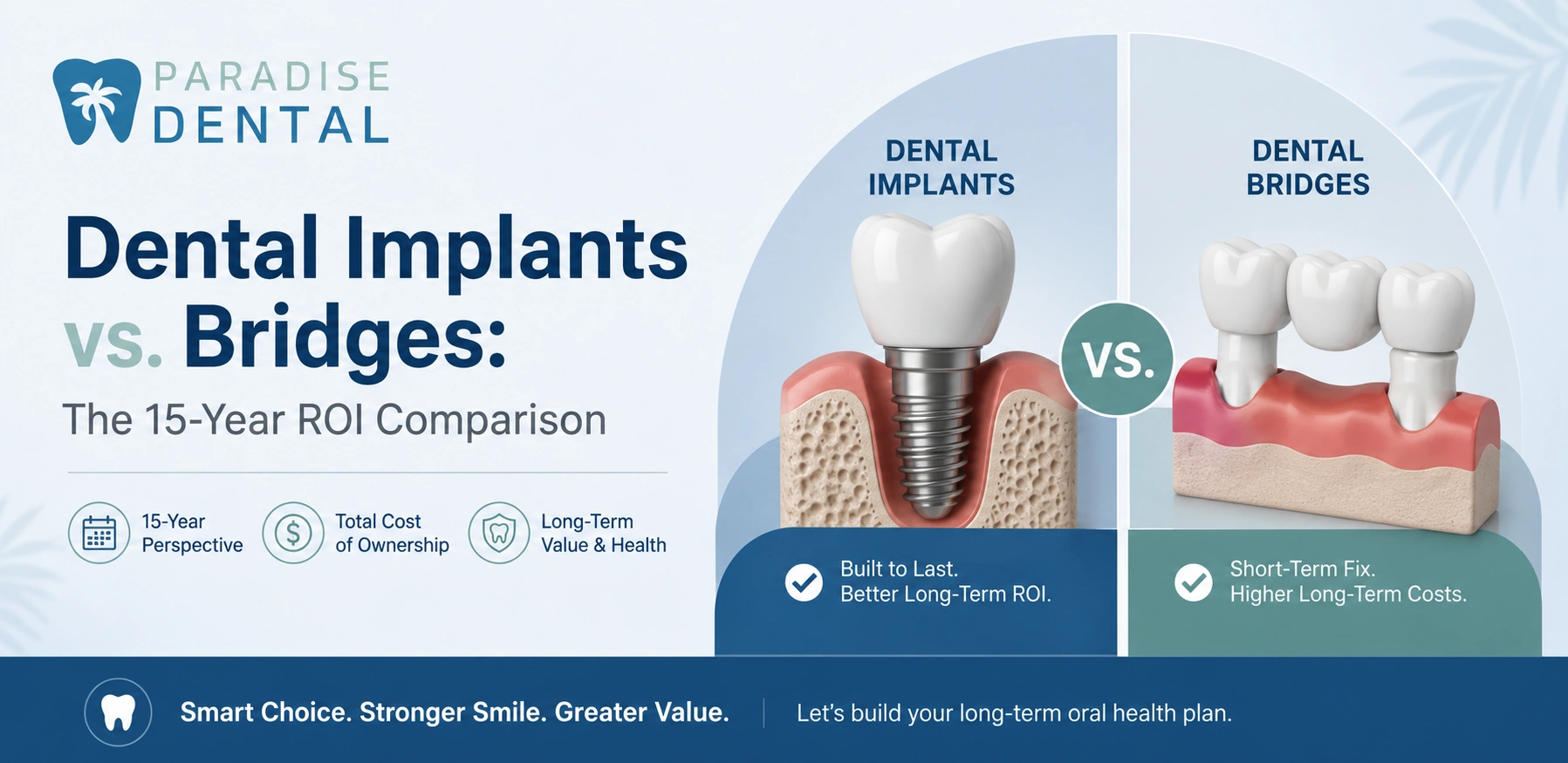
When patients in Bradenton and Sarasota lose a tooth, one of the first questions is:
“Should I get a dental implant, or just a bridge?”
The answer depends on more than upfront cost. Over 10–15 years, the financial, functional, and aesthetic outcomes can vary significantly.
The important question is not just “what costs less today.” It is “which option lasts longer, protects surrounding teeth, and gives predictable results for the long-term?”
Understanding the Options
Dental Bridge
- A bridge replaces a missing tooth by anchoring to adjacent teeth.
- Traditional bridges require filing down the neighboring teeth to support the new crown.
- Lifespan: typically 7–15 years, sometimes longer with excellent care.
Dental Implant
- A dental implant replaces the tooth root with a titanium post and supports a crown on top.
- Does not require altering neighboring teeth.
- Lifespan: 15+ years, often decades with proper care.
Both solutions restore chewing function and improve aesthetics. But the long-term implications differ.
Initial Cost Comparison
For a single missing tooth in Bradenton, typical ranges are:
- Bridge: $1,500–$3,000
- Implant + Crown: $3,000–$6,500
Bridges are cheaper upfront. But the cost analysis changes when looking at maintenance and replacement over time.
15-Year Maintenance Considerations
Bridges:
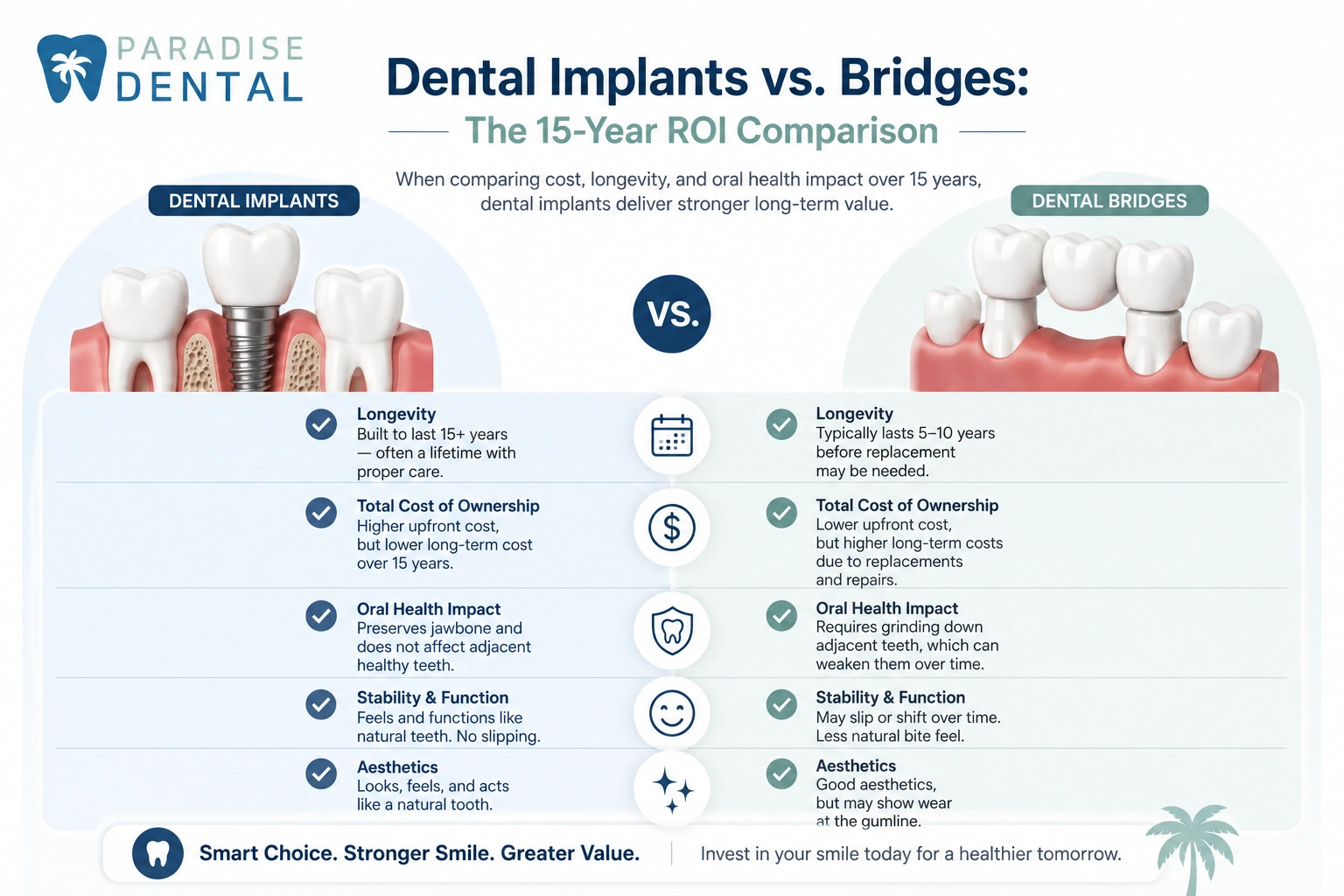
- May need replacement every 10–15 years
- Risk of decay or failure on abutment teeth
- Additional treatment may include root canals or crown replacements on supporting teeth
- Lifelong maintenance costs can accumulate
Implants:
- High initial investment
- Minimal risk to adjacent teeth
- Long-term maintenance typically involves routine cleaning and exams
- Rarely need replacement if properly cared for
Studies show that over 15 years, total costs for a bridge may approach or even exceed the cost of an implant when factoring in replacement, repairs, and potential complications.
Functional and Health Differences
- Bone Preservation: Implants stimulate the jawbone, helping prevent bone loss. Bridges do not, which can lead to changes in facial structure over time.
- Adjacent Teeth: Bridges require altering healthy teeth. Implants leave neighboring teeth untouched.
- Oral Hygiene: Bridges require special flossing under the pontic, while implants can be brushed and flossed like natural teeth.
- Longevity: Implants generally have higher success rates over 15+ years compared to bridges.
Aesthetic Considerations
- Implants maintain gum and bone contours better, leading to a more natural look over time.
- Bridges can sometimes show a darker line near the gums as supporting teeth age or gum recession occurs.
For patients in socially active communities like Sarasota or Lakewood Ranch, these long-term aesthetic differences often factor heavily into the decision.
Realistic ROI
When factoring in:
- longevity
- maintenance costs
- potential complications
- health of surrounding teeth
- functional and aesthetic outcomes
Most patients find dental implants offer the better 15-year ROI, despite the higher upfront cost.
Bridges may make sense in specific situations:
- Limited bone availability
- Medical or surgical contraindications
- Budget constraints
- Desire to avoid surgery
A dentist like Dr. Jeffrey Martins at Paradise Dental can evaluate:
- bone quality and quantity
- bite and alignment
- oral hygiene habits
- adjacent tooth condition
- cosmetic goals
And help determine which solution offers the best balance of cost, durability, and health for the individual patient.
Key Takeaways
- Bridges cost less upfront, but may need replacement, affecting long-term ROI.
- Implants preserve bone, protect adjacent teeth, and last longer.
- Functional and aesthetic outcomes generally favor implants over 15 years.
- Individual factors bone health, bite, adjacent teeth, and lifestyle matter most.
- Professional evaluation is essential for predicting which treatment will be the most cost-effective and durable.
At Paradise Dental, the goal is to help patients make a realistic, long-term investment in their oral health, not just the cheapest short-term fix.