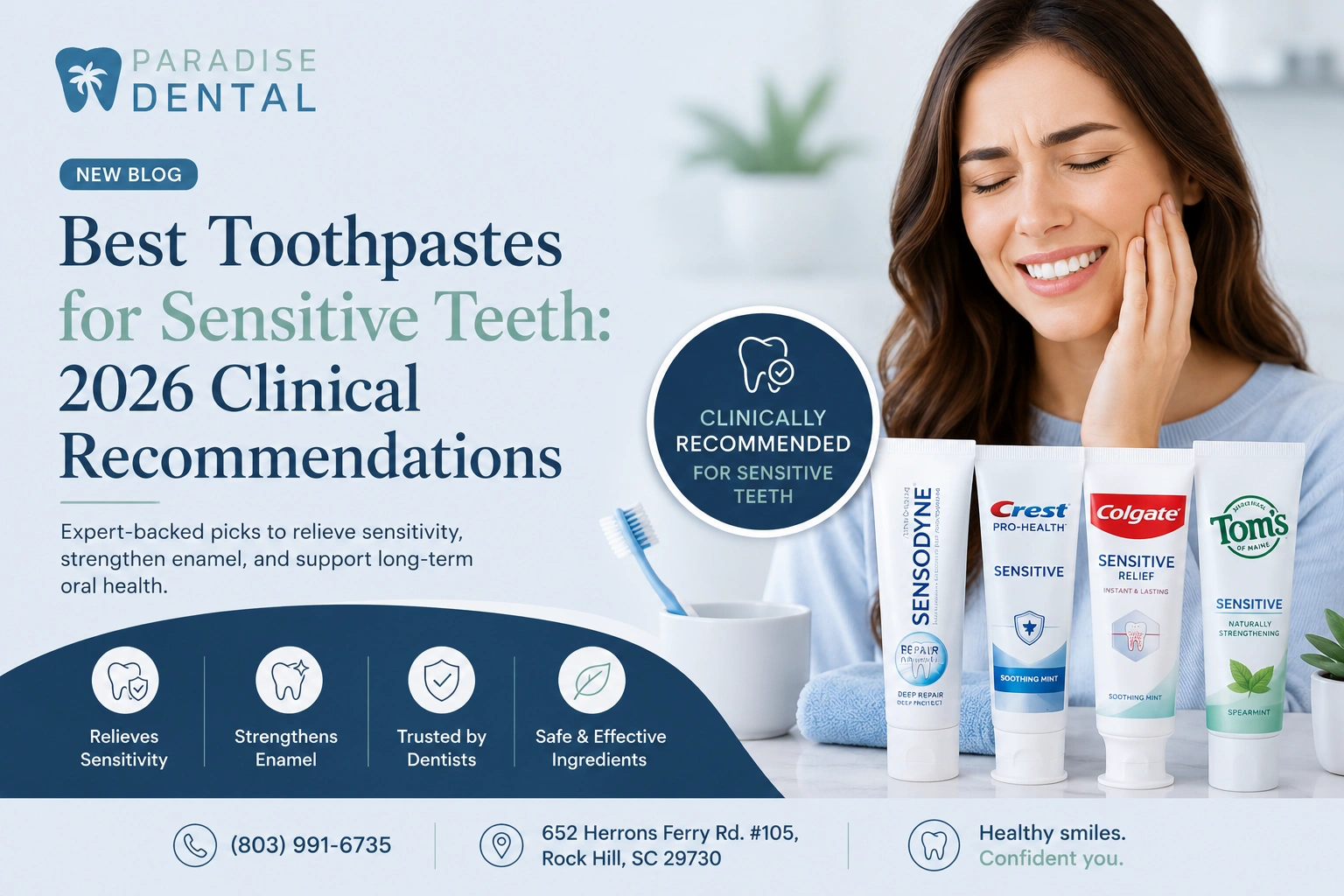
Many patients in Bradenton, Lakewood Ranch, and Sarasota struggle with tooth sensitivity. Sharp pain from cold drinks, sweets, or even brushing can make daily oral hygiene uncomfortable.
Choosing the right toothpaste is the first step to relief.
These 2026 clinical recommendations focus on effectiveness, safety, and long-term enamel protection, not marketing hype.
How Toothpaste Reduces Sensitivity
Tooth sensitivity occurs when:
- dentin tubules are exposed (from gum recession, enamel erosion, or wear)
- nerve endings in the pulp react to stimuli (cold, heat, sugar, pressure)
Sensitivity toothpastes work primarily in two ways:
- Tubule Occlusion – blocks open dentin tubules so stimuli don’t reach nerves.
- Active ingredients: potassium nitrate, stannous fluoride, strontium chloride.
- Nerve Desensitization – calms the nerve response in dentin.
- Active ingredient: potassium nitrate.
Many modern formulations combine both strategies while maintaining cavity protection and enamel strength.
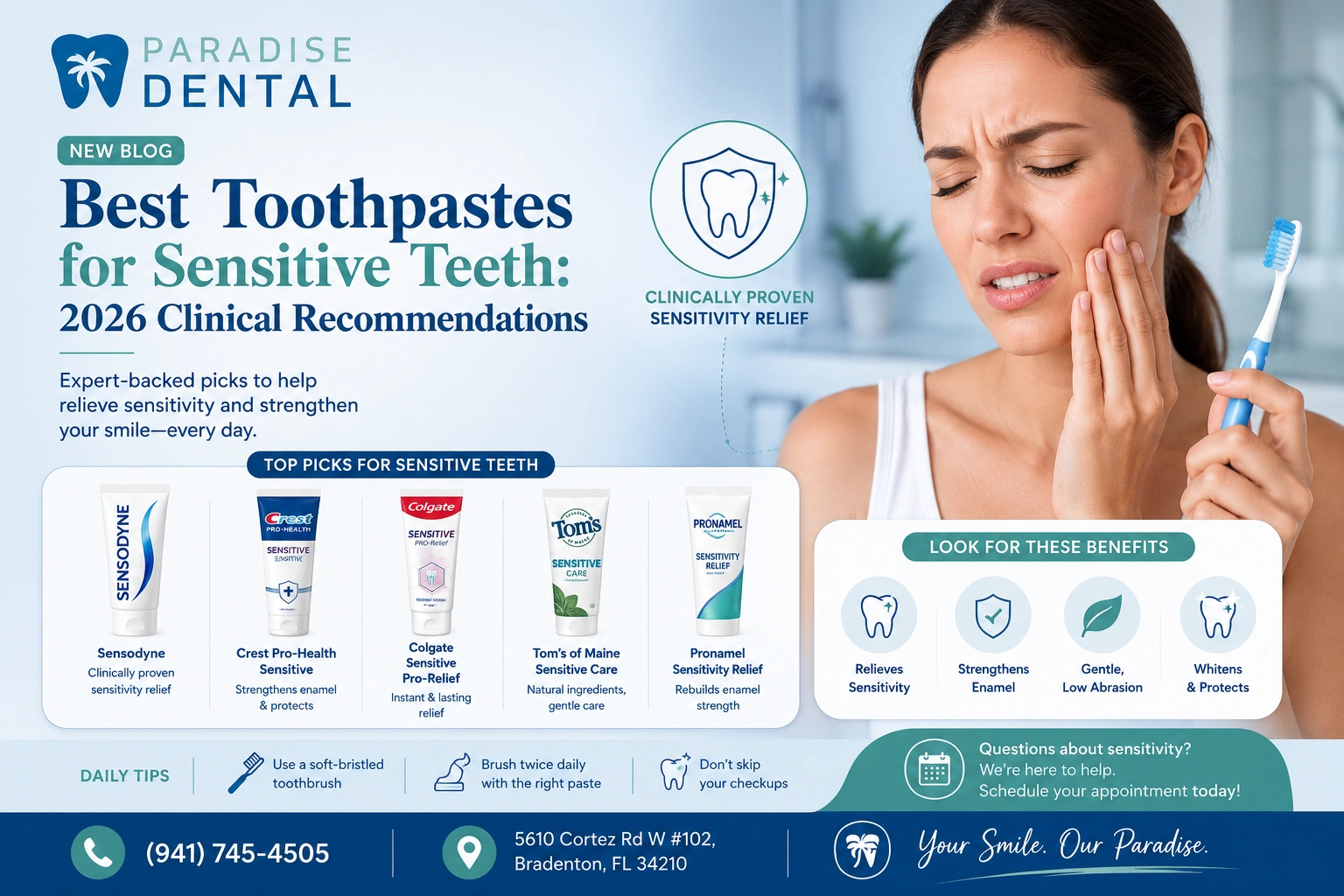
Top Clinical Recommendations (2026)
- Sensodyne Pronamel Gentle Whitening or Repair & Protect
- Active: Potassium nitrate + fluoride
- Why it works: Reduces nerve sensitivity, strengthens enamel, protects against acid erosion.
- Ideal for patients with enamel thinning or post-whitening sensitivity.
- Colgate Sensitive Pro-Relief Enamel Repair
- Active: Pro-Argin technology + fluoride
- Mechanism: Seals dentin tubules fast, provides long-lasting relief
- Bonus: Clinically proven immediate sensitivity reduction on contact.
- Crest Gum & Sensitivity + Enamel Shield
- Active: Stannous fluoride
- Benefits: Protects against cavities, reduces gum inflammation, blocks tubules
- Ideal for patients with mild gingivitis and sensitivity.
- Pronamel Rapid Relief (2026 update)
- Active: Potassium nitrate + stannous fluoride
- Notes: Provides relief within one week of twice-daily brushing
- Good option for patients who just started experiencing sensitivity.
- Clinpro 5000 (Prescription Strength Fluoride Toothpaste)
- Active: 1.1% Sodium fluoride
- Recommended for: Patients with severe enamel wear or high-risk cavities
- Must be used under dental supervision.
Practical Tips for Sensitive Teeth
- Brush gently with a soft-bristled brush. Aggressive brushing worsens sensitivity.
- Avoid highly acidic foods and beverages immediately after brushing.
- Wait 30 minutes to an hour after acidic meals before brushing to protect enamel.
- Use toothpaste consistently — twice daily for best effect.
- Consider fluoride rinses or professional treatments if sensitivity persists.
When to See a Dentist
Even the best sensitivity toothpaste may not solve all problems.
Schedule an evaluation if you notice:
- Sudden increase in sensitivity
- Pain localized to a single tooth
- Cracks, chips, or worn enamel
- Bleeding gums or gum recession
At Paradise Dental, Dr. Jeffrey Martins evaluates the cause of sensitivity before recommending toothpaste, professional fluoride, or other treatment because relief depends on identifying the source, not just masking the symptom.
In short, the 2026 clinical consensus favors potassium nitrate and stannous fluoride–based toothpastes for effective, long-term relief. The key is consistency, gentle brushing, and professional guidance when sensitivity persists.