A lot of patients in Bradenton and Sarasota notice something strange during peak allergy season:
Their gums suddenly start bleeding.
Usually it happens:
- while brushing,
- while flossing,
- or sometimes while eating certain foods.
Most people assume one of two things:
- “I must be brushing too hard.”
- “It’s just allergies.”
The reality is more complicated.
Allergies themselves do not directly cause gum bleeding. But the effects of Florida’s long allergy season absolutely can contribute to inflammation, dry mouth, irritated tissues, and worsening gum health.
For many patients, bleeding gums during allergy season are a sign that something else is already happening underneath.
The important question is whether the bleeding is temporary irritation or early gum disease becoming more noticeable.
First: Healthy Gums Usually Do Not Bleed
This is important.
Even during allergy season, healthy gums generally should not bleed regularly.
Occasional irritation can happen. But consistent bleeding is usually a sign of inflammation.
That inflammation may be:
- mild gingivitis,
- early periodontal disease,
- dry mouth,
- mouth breathing,
- or irritation from allergy medications.
A good dentist should help determine which category you fall into.
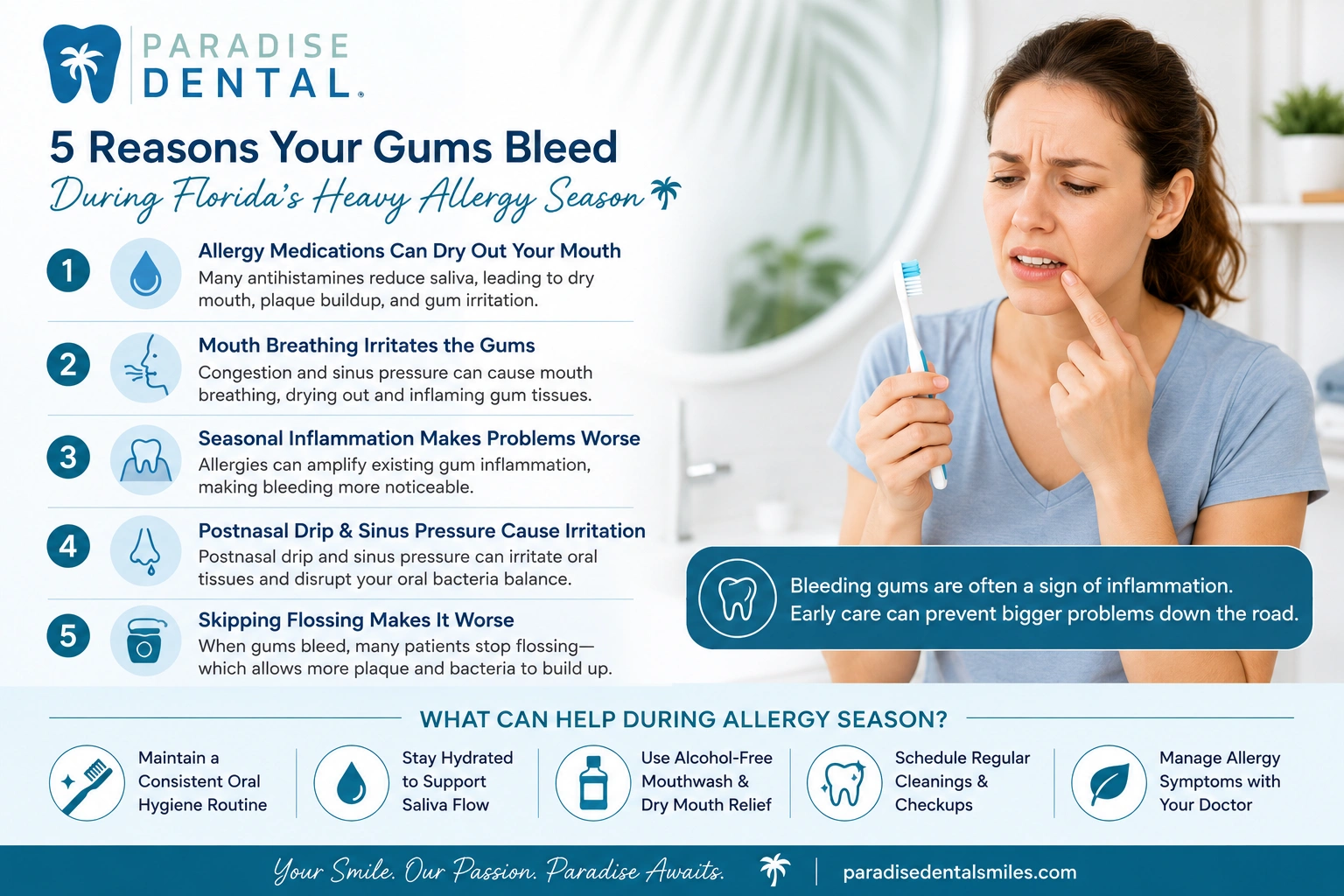
1. Allergy Medications Can Dry Out Your Mouth
This is probably the most common reason patients notice gum changes during Florida allergy season.
Many antihistamines reduce saliva production.
That includes:
- Claritin
- Zyrtec
- Benadryl
- Allegra
- and other common allergy medications
Saliva matters more than most patients realize.
It helps:
- neutralize bacteria
- wash away food particles
- protect gum tissue
- reduce plaque buildup
When the mouth becomes dry, bacteria and plaque accumulate more easily along the gumline.
That can lead to:
- irritation
- bleeding
- swelling
- bad breath
- increased sensitivity
Patients who already have mild gingivitis often notice symptoms worsen dramatically during allergy season because of dry mouth alone.
2. Mouth Breathing Irritates the Gums
Florida allergy season often means:
- congestion
- sinus pressure
- postnasal drip
- blocked nasal breathing
When patients breathe through their mouth more often, especially during sleep, gum tissues can dry out and become inflamed.
This commonly affects:
- front gums
- upper gum tissue
- and areas already prone to irritation
Patients sometimes wake up with:
- swollen gums
- tenderness
- or bleeding during brushing
The problem is not always aggressive brushing.
Sometimes the tissues have simply become chronically irritated from airflow and dryness.
3. Seasonal Inflammation Can Make Existing Gum Disease More Noticeable
This is where many patients misunderstand what is happening.
Allergy season does not create periodontal disease overnight.
But it can amplify inflammation that already exists.
A patient with mild gingivitis may barely notice symptoms most of the year.
Then during heavy pollen season:
- tissues swell more easily
- immune responses increase
- mouth breathing increases
- dry mouth worsens
- oral hygiene becomes less effective
Suddenly the gums bleed much more noticeably.
In other words:
the allergies may not be the root problem they may simply expose it.
4. Postnasal Drip and Sinus Pressure Can Irritate Oral Tissues
This is especially common in Sarasota and Bradenton during high pollen months.
Postnasal drip changes the oral environment constantly.
Combined with sinus pressure, patients may experience:
- throat irritation
- bad breath
- inflamed soft tissues
- altered oral bacteria
- increased plaque accumulation
Patients sometimes think they have a “tooth problem” when the issue is actually sinus-related inflammation affecting nearby tissues.
Other times, dental inflammation and sinus inflammation overlap.
This is why proper evaluation matters.
5. Patients Often Stop Flossing When Their Gums Bleed
This creates a cycle dentists see constantly.
The gums bleed.
The patient becomes nervous.
They stop flossing the area.
Unfortunately, that usually makes the inflammation worse.
For most patients, bleeding while flossing is actually a sign the gums need more consistent plaque removal not less.
That said, there is a difference between:
- mild bleeding from inflammation
and - significant pain, swelling, or persistent bleeding
A good dentist should evaluate ongoing symptoms rather than assuming everything is “just allergies.”
When Bleeding Gums Are Usually Not an Emergency
Mild bleeding during allergy season is usually not urgent if:
- symptoms are temporary
- gums improve with hygiene
- there is no major swelling
- pain is minimal
- and no loose teeth are present
But bleeding that continues for weeks should not simply be ignored.
Especially if you notice:
- persistent bad breath
- gum recession
- tenderness
- loose teeth
- pus
- pain while chewing
- or worsening swelling
Those symptoms may indicate periodontal disease rather than seasonal irritation alone.
What Actually Helps During Allergy Season
For most patients, the realistic solution involves reducing inflammation overall.
That may include:
- professional cleanings
- improved flossing consistency
- dry mouth management
- hydration
- alcohol-free rinses
- treating gum disease early
- and managing allergy symptoms appropriately
Patients with severe dry mouth may also benefit from:
- saliva-support products
- prescription rinses
- or fluoride protection if cavities are increasing
The important thing is not assuming the bleeding is “normal.”
Why Florida Patients Notice This More
Patients relocating to Sarasota or Bradenton are often surprised by how long allergy season lasts here.
Because of:
- pollen,
- humidity,
- mold,
- and nearly year-round environmental allergens,
Many patients experience chronic low-grade sinus and allergy symptoms much longer than they did in other states.
That means oral inflammation related to allergies can also become more persistent.
When to See a Dentist About Bleeding Gums
You should schedule an evaluation if:
- bleeding continues more than 1–2 weeks
- gums are swollen regularly
- flossing always causes bleeding
- teeth feel loose
- bad breath persists
- or gum recession is increasing
At Paradise Dental in Bradenton, Dr. Jeffrey Martins evaluates whether bleeding gums are related to:
- simple gingivitis,
- periodontal disease,
- dry mouth,
- bite issues,
- medication effects,
- or other underlying causes.
Because while allergies may contribute to gum irritation, healthy gums generally do not bleed consistently without a reason.
And catching gum disease early is usually much easier and less expensive than waiting until the damage becomes advanced.