
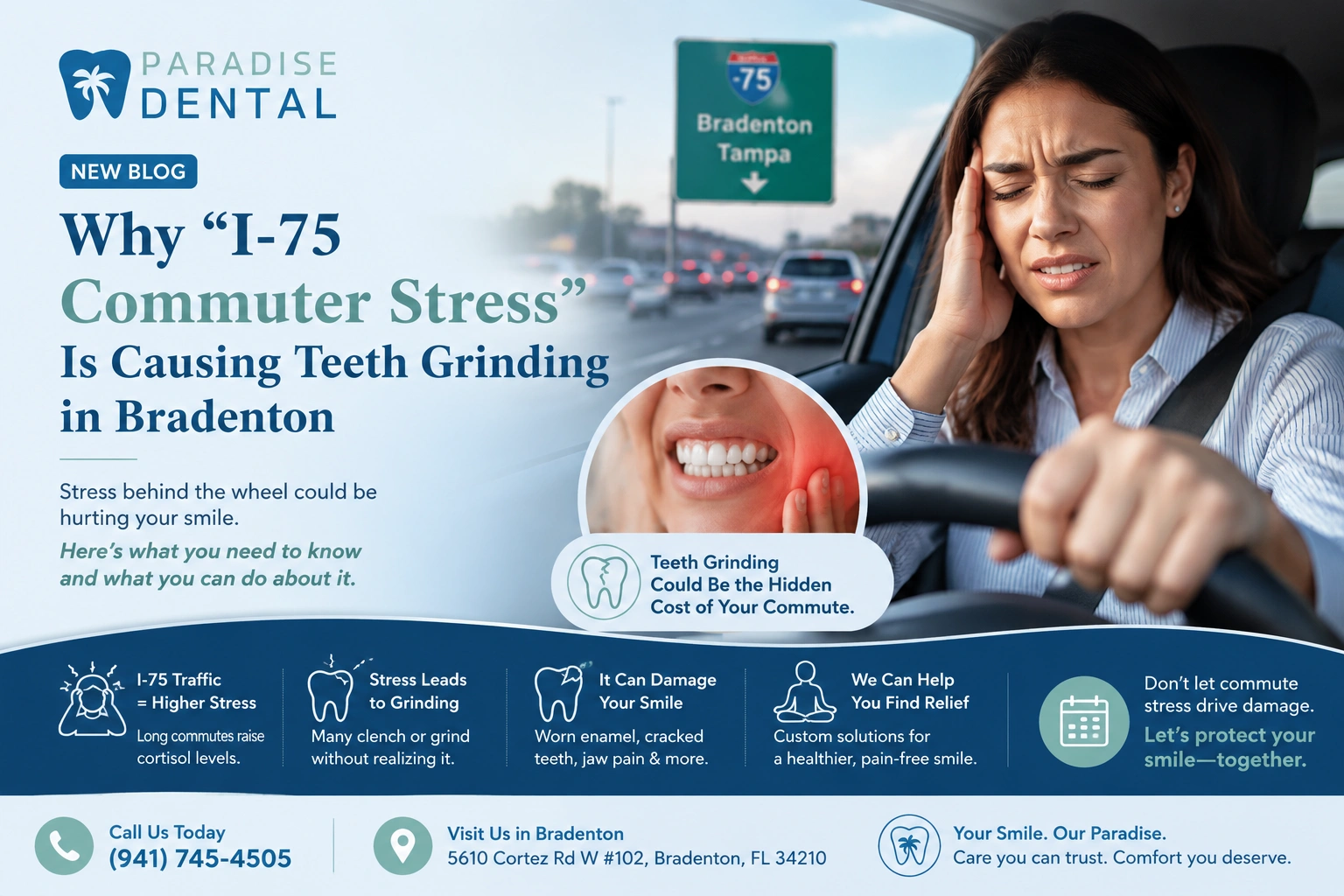
Many patients in Bradenton and Lakewood Ranch are experiencing teeth grinding (bruxism) without realizing the connection to daily stressors especially commuting along I‑75 during peak hours.
For many, the morning or evening drive is more than an inconvenience. Heavy traffic, stop-and-go patterns, and tight deadlines create chronic stress that manifests physically in ways the brain often hides until bedtime.
1. Stress Is the Primary Trigger
Bruxism is often stress-related. When the brain experiences chronic tension:
- jaw muscles tighten unconsciously
- nighttime clenching or grinding increases
- headaches, jaw pain, and worn teeth appear
Daily commuters along I‑75 report higher stress levels because traffic is unpredictable, accidents happen frequently, and delays can make them late for work or appointments.
This stress does not always stop when the commute ends; it continues while the body sleeps, often resulting in nighttime teeth grinding.
2. Morning vs. Evening Grinding
Some patients notice grinding more at night, some upon waking with soreness.
Factors influencing timing:
- Morning commuters may carry residual anxiety from the day ahead.
- Evening commuters may have built-up tension from work stress compounded by traffic frustrations.
Both scenarios put pressure on the jaw muscles and teeth.
3. Physical Signs You May Be Grinding
Patients often don’t recognize bruxism until damage occurs. Common signs include:
- worn, flattened, or chipped teeth
- jaw soreness or fatigue
- headaches in the temples
- clicking or popping jaw joints
- increased tooth sensitivity
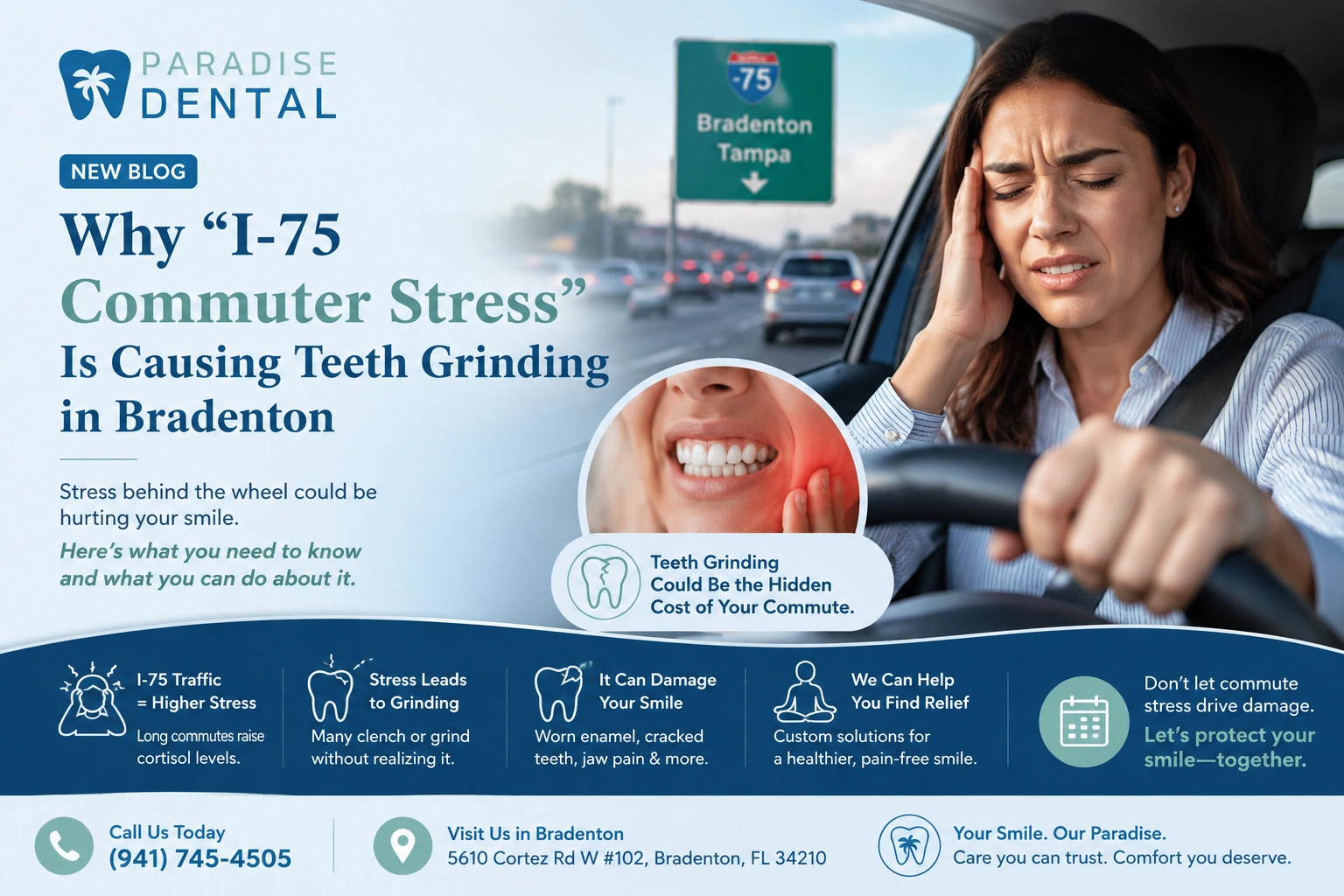
In Bradenton, patients often notice symptoms after weeks of heavy traffic stress, particularly during tourist season or when local events increase road congestion.
4. Why Traffic Makes It Worse
Commuter stress contributes to grinding through:
- Sympathetic nervous system activation – your body treats traffic stress like a mini “fight or flight” scenario
- Muscle tension – jaw muscles tighten unconsciously while gripping the wheel or stressing over delays
- Sleep disruption – stress affects sleep quality, which can amplify nocturnal grinding
Even short commutes can trigger this cycle if daily stress remains high.
5. Solutions to Protect Your Teeth
- Nightguards – custom-fitted dental appliances protect teeth from wear.
- Stress management – deep breathing, meditation, or even podcasts during the commute can reduce tension.
- Jaw exercises – gentle stretching and massage for the jaw muscles after commuting.
- Regular dental checkups – early detection of enamel wear, cracks, or TMJ issues prevents costly repairs.
- Monitor caffeine and alcohol intake – these can increase clenching or grinding intensity.
6. When to Seek Help
You should consult a dentist if you notice:
- unexplained tooth wear
- jaw soreness on waking
- headaches or TMJ pain
- cracked fillings or teeth
At Paradise Dental in Bradenton, Dr. Jeffrey Martins evaluates whether grinding is stress-related, traffic-related, or caused by bite misalignment, and recommends custom solutions from nightguards to lifestyle strategies to protect your teeth long-term.
Bottom line: Chronic stress from I‑75 commuting may seem unavoidable, but its effects on your teeth are not. Early intervention with a nightguard, stress-reduction strategies, and professional guidance can prevent permanent damage and keep your smile healthy despite daily traffic frustrations.