For many patients in Lakewood Ranch and Bradenton, cosmetic dentistry starts with a simple desire:
“I want my smile to look good for work, dates, photos, and social life without overdoing it.”
Two common options are veneers and bonding. Both can improve color, shape, and small alignment issues, but they are very different in cost, longevity, and impact on your teeth.
The important question is not which is more popular. It is which approach fits your smile, goals, and lifestyle realistically.
Understanding the Options
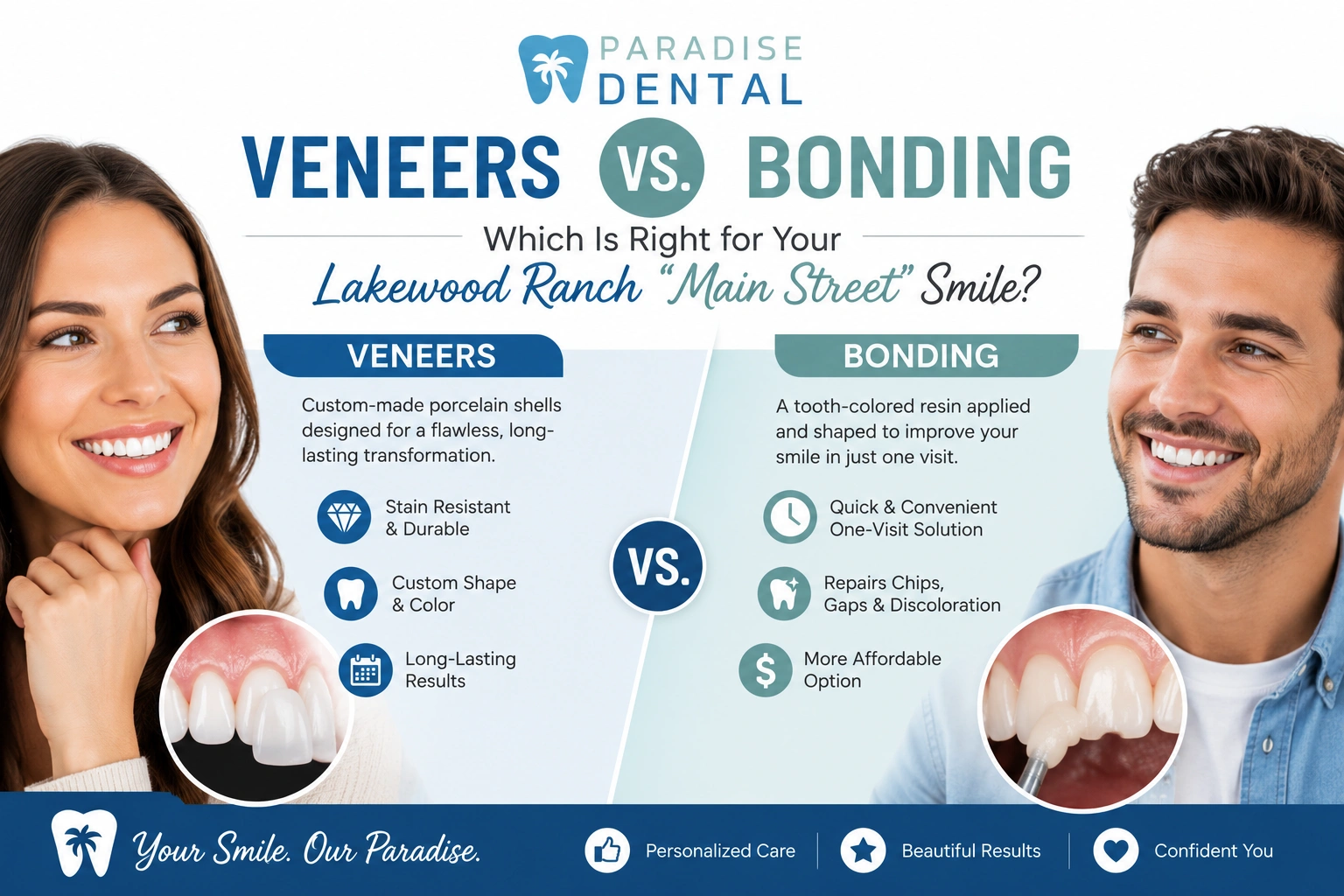
Dental Bonding
- Uses a composite resin applied to the tooth surface.
- Can fix minor chips, gaps, discoloration, or uneven edges.
- Usually completed in a single visit.
- Lifespan: 4–8 years with good care.
- Cost per tooth in Bradenton: $300–$700.
Veneers
- Thin porcelain shells bonded to the front of teeth.
- Can dramatically improve color, shape, symmetry, and alignment.
- Usually requires 2 visits.
- Lifespan: 10–20 years with proper care.
- Cost per tooth in Bradenton: $1,200–$2,500.
1. How Much Tooth Structure Is Affected
Bonding is minimally invasive. Enamel is usually left intact, and the procedure is reversible.
Veneers require removing a thin layer of enamel to ensure proper fit and adhesion. That means veneers are a permanent commitment.
Patients sometimes underestimate this difference. If you may want to reverse treatment later, bonding is the safer option.
2. Durability and Longevity
Bonding is prone to staining and chipping over time, especially in patients who:
- chew ice,
- bite nails,
- grind teeth,
- or consume staining foods/drinks frequently.
Veneers are much more resistant to chips, cracks, and discoloration. For patients seeking a long-term solution with minimal maintenance, veneers are often a better investment.
3. Cosmetic Impact
Bonding can improve small imperfections effectively.
Veneers are better for:
- multiple imperfections on several teeth,
- uniform color changes,
- small alignment corrections,
- and smile transformations.
Patients with minor chips or a single discolored tooth may find bonding sufficient. Those seeking a “Main Street” smile makeover across several teeth may benefit more from veneers.
4. Cost Considerations
Bonding is cheaper upfront but often needs touch-ups or replacement sooner.
Veneers are more expensive initially, but may offer a better 10–15 year ROI if you want predictable color, shape, and function.
A dentist should help you weigh upfront cost versus long-term value, not just default to the most expensive option.
5. Maintenance and Lifestyle
Bonding may require more frequent polishing or repairs.
Veneers require careful oral hygiene but are generally low-maintenance otherwise.
Patients who grind or clench may need a nightguard regardless of the treatment to protect their investment.
6. Realistic Expectations
Neither treatment changes bite mechanics dramatically. Both primarily address appearance.
Bonding can be repaired easily if damaged. Veneers require replacement if broken.
A good dentist should explain:
- which teeth are best suited for each option,
- how lifestyle affects longevity,
- how realistic the cosmetic improvement will be,
- and when a combination of approaches may make sense.
Paradise Dental Approach
At Paradise Dental in Lakewood Ranch, Dr. Jeffrey Martins evaluates:
- tooth structure and enamel thickness,
- bite and occlusion,
- existing dental work,
- patient habits and expectations,
- and desired cosmetic outcome.
Sometimes a hybrid approach works best:
- veneers for front teeth most visible in photos and smiles,
- bonding for minor corrections on adjacent teeth.
The goal is a balanced, natural-looking “Main Street” smile that lasts, rather than simply upgrading teeth for the sake of appearance.
Bottom Line:
- Bonding: great for minor corrections, low cost, reversible, shorter lifespan.
- Veneers: better for multiple teeth, long-lasting, stain-resistant, permanent.
The right choice depends on your teeth, lifestyle, budget, and cosmetic goals. A consultation with an experienced cosmetic dentist is the best way to decide which is truly right for your smile.