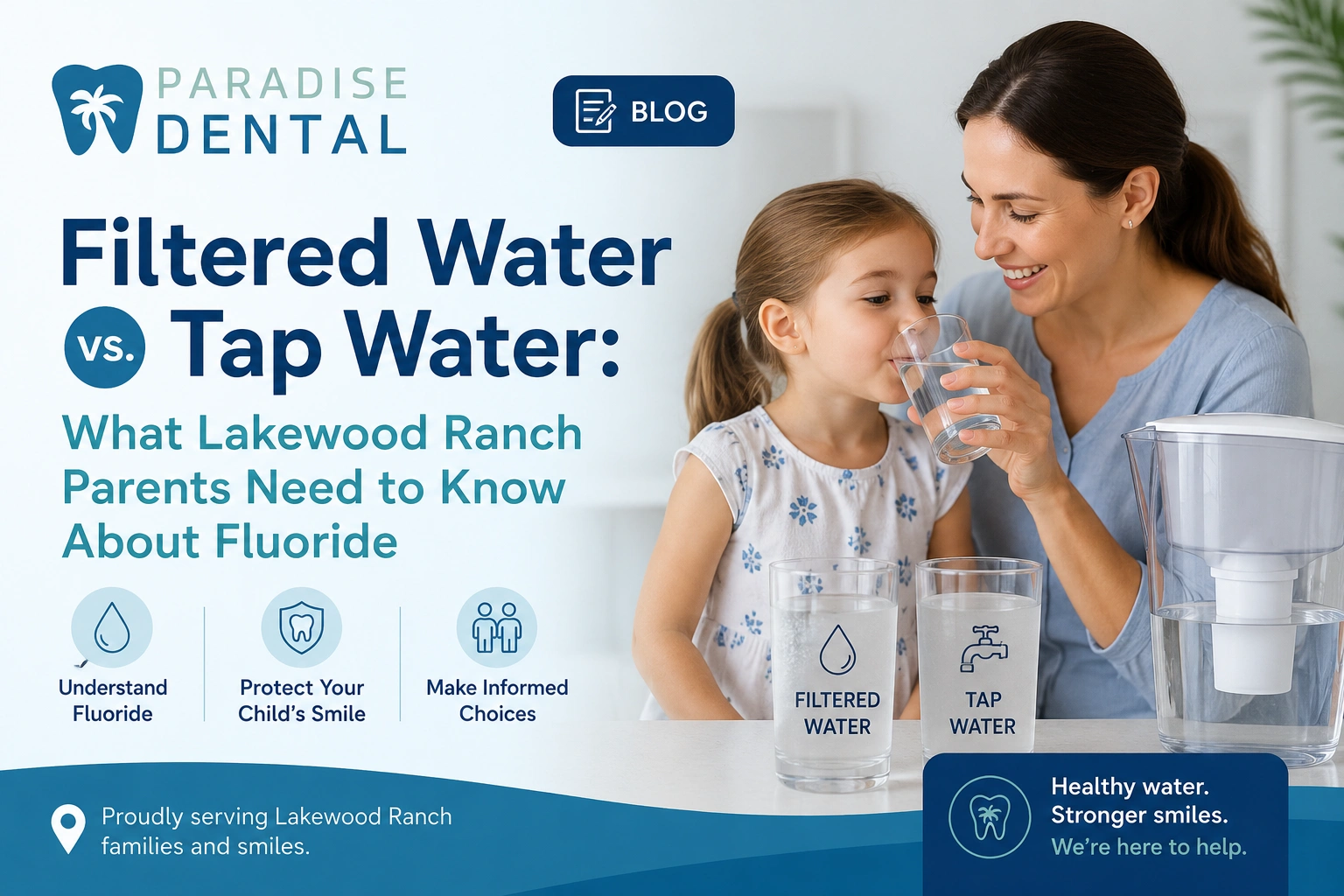
A lot of Lakewood Ranch parents are asking a very reasonable question:
“If my kids drink filtered water instead of tap water, are they missing fluoride?”
The honest answer is: possibly but in Manatee County, the bigger issue is that fluoride may not be in the public tap water the way many parents assume.
Manatee County voted in April 2025 to stop adding fluoride to county drinking water, after reports that the fluoridation system had not been functioning since 2021. Florida also passed a statewide restriction on adding fluoride and certain other additives to public water systems, effective July 1, 2025.
So for many Bradenton and Lakewood Ranch families, the question is no longer just “tap vs. filtered.”
It is: Where is my child actually getting cavity protection from?
Why Fluoride Matters for Kids’ Teeth
Fluoride helps strengthen enamel and makes teeth more resistant to cavities. The CDC, ADA, and American Academy of Pediatrics continue to support community water fluoridation as a cavity-prevention measure.
That does not mean every child needs extra fluoride.
It means your child’s risk should be looked at individually.
A child with no cavities, good brushing habits, low sugar intake, and regular dental visits may need less support than a child with frequent cavities, braces, dry mouth, enamel defects, or lots of snacking.
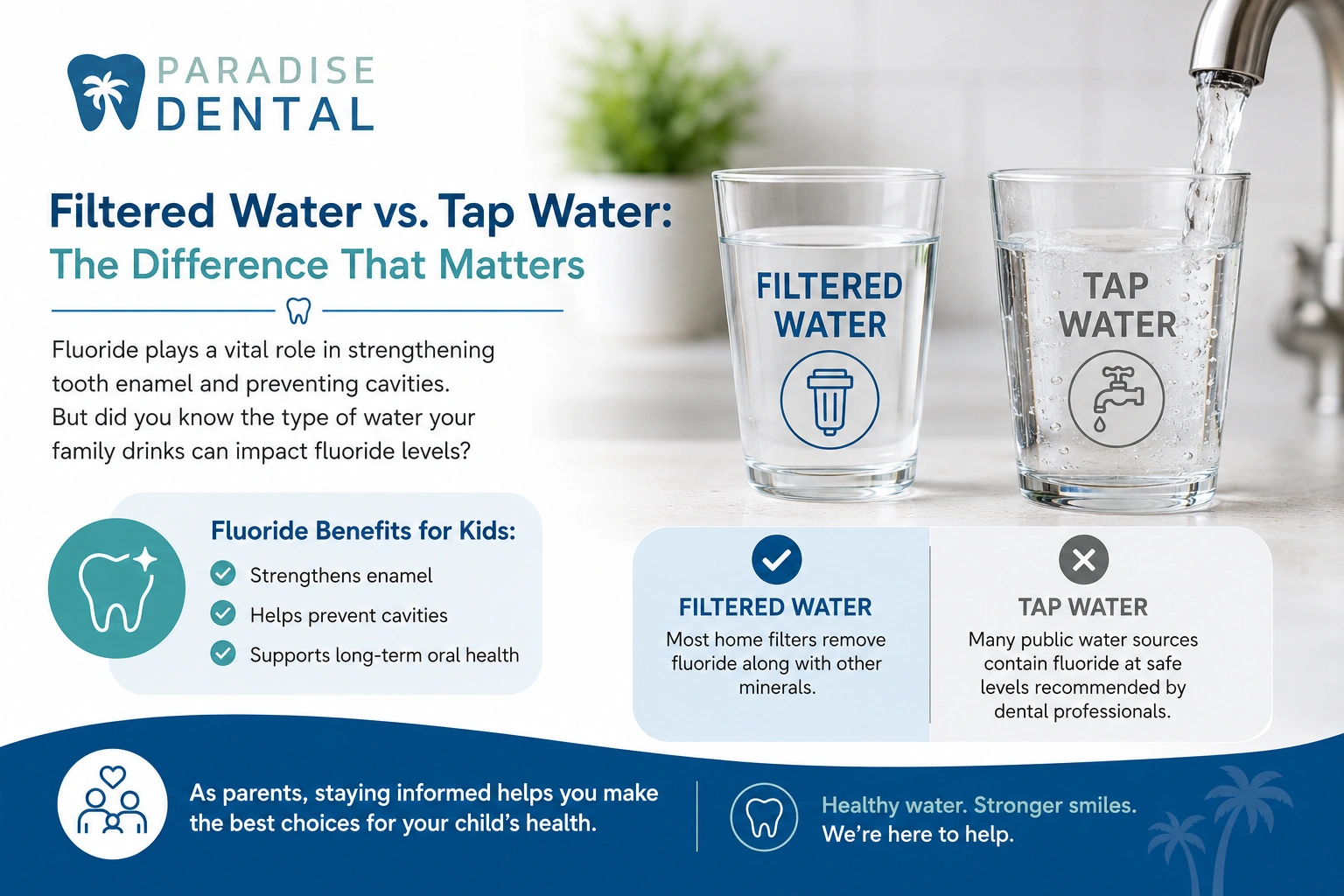
Does Filtered Water Remove Fluoride?
It depends on the filter.
Most basic refrigerator filters and pitcher filters improve taste and reduce certain contaminants, but they may not remove much fluoride.
Filters more likely to reduce fluoride include:
- reverse osmosis systems
- distillation systems
- some specialty fluoride-removal filters
That means two families in Lakewood Ranch may both say they drink “filtered water,” but their fluoride exposure may be completely different.
This is where parents should check the actual filter type, not just the brand.
Bottled Water Can Be Confusing Too
Many kids drink bottled water at school, sports, or activities.
Some bottled waters contain fluoride. Many do not. Some labels do not make it obvious.
If your child drinks mostly bottled or reverse osmosis water, they may be getting very little fluoride from water at all.
That does not automatically mean there is a problem.
But it is worth discussing during a dental visit, especially if cavities are starting to show up.
Should Parents Add Fluoride Supplements?
Not without guidance.
Fluoride supplements are not something parents should guess on. They depend on:
- your child’s age
- cavity risk
- fluoride exposure from water
- toothpaste use
- diet
- dental history
The American Academy of Pediatric Dentistry says fluoride therapy should be based on the specific needs of each patient, not used the same way for everyone.
What Paradise Dental Would Look At
At Paradise Dental, Dr. Jeffrey Martins would not answer this with a blanket rule.
The better question is:
“Is your child at low, moderate, or high risk for cavities?”
That depends on:
- past cavities
- brushing quality
- flossing habits
- diet and snacking
- dry mouth
- orthodontics
- enamel strength
- family cavity history
- whether the child drinks tap, bottled, or filtered water
For some kids, fluoride toothpaste and routine cleanings may be enough.
For others, professional fluoride treatments or sealants may make sense.
The Practical Parent Answer
Filtered water is not bad. Tap water is not automatically better. And fluoride is not an all-or-nothing issue.
For Lakewood Ranch parents, the safest practical approach is:
Know what your child drinks most often, know what your filter removes, and ask your dentist whether your child’s cavity risk calls for extra protection.
At Paradise Dental, the goal is not to push unnecessary fluoride. It is to help parents understand what their child actually needs based on their teeth, habits, and risk.