Dental emergencies are stressful partly because patients usually have two questions at the same time:
“How serious is this?”
and
“How much is this going to cost?”
Unfortunately, many people delay emergency dental care because they are worried about unexpected fees, being pressured into treatment, or walking into a situation they do not fully understand.
For most patients in Bradenton and Lakewood Ranch, an emergency dental visit is more affordable and more straightforward than they expect.
The important thing is understanding what the emergency exam includes, what additional treatment may be necessary, and what changes the total cost.
What Counts as a Dental Emergency?
Not every dental problem requires same-day treatment.
But some symptoms should not be ignored.
Common reasons patients seek emergency dental care include:
- severe tooth pain
- swelling
- broken or cracked teeth
- knocked-out teeth
- abscesses
- lost crowns or fillings
- gum infections
- facial pressure
- pain while chewing
- sudden sensitivity
- dental trauma
Some emergencies are primarily painful. Others are potentially serious infections.
This is where urgency matters.
For example, swelling involving the face, gums, or jaw can indicate infection spread and should be evaluated quickly.
What Does an Emergency Dental Visit Usually Cost?
In Bradenton, emergency dental exams commonly range from about $75 to $250 depending on:
- imaging needed
- complexity
- after-hours care
- whether additional treatment is performed
At Paradise Dental, the emergency visit is focused on diagnosing the problem clearly and helping the patient understand:
- what is happening
- how urgent it is
- what treatment options exist
- and what can reasonably wait
That matters because not every emergency automatically requires major treatment the same day.
What Is Usually Included in an Emergency Exam?
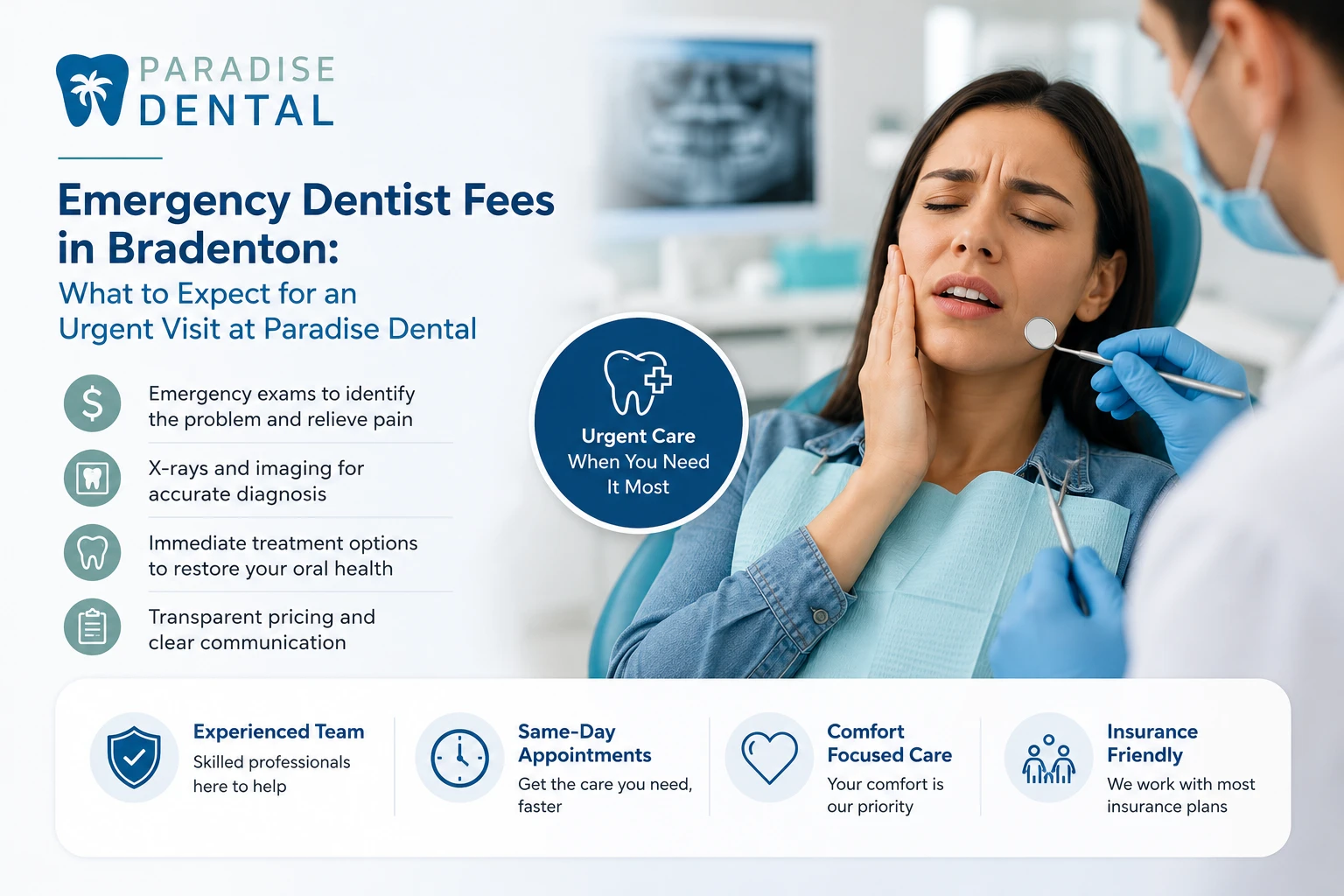
Most emergency visits include:
- examination
- digital X-rays
- diagnosis
- discussion of treatment options
- pain management recommendations
Additional costs may apply if treatment is performed immediately.
For example:
- extractions
- root canals
- temporary crowns
- sedative procedures
- infection treatment
- repairing broken teeth
The emergency exam itself is often the least expensive part of the visit.
The condition causing the emergency is what changes the overall cost.
Why Emergency Dental Costs Vary So Much
This is one of the biggest misunderstandings patients have.
Two patients may both arrive saying:
“My tooth hurts.”
But the treatment needs can be completely different.
One patient may only need:
- a filling adjustment
- antibiotics
- or replacing a lost filling
Another patient may require:
- a root canal
- crown
- extraction
- implant planning
- or treatment for severe infection
That is why emergency dental pricing can vary significantly.
The important question is not just where the pain is.
It is why the pain started.
Common Emergency Dental Treatments and Typical Costs
These are general ranges patients in the Bradenton area often see:
- Emergency exam and X-rays: $75–$250
- Simple filling repair: $150–$450
- Tooth extraction: $250–$700+
- Surgical extraction: $400–$1,200+
- Root canal: $900–$2,000 depending on tooth
- Crown after root canal: $1,100–$2,200
- Temporary crown repair: varies
- Sedation: additional cost if needed
These numbers can vary based on:
- tooth location
- infection severity
- whether specialists are involved
- after-hours care
- complexity
- and insurance coverage
A molar root canal is generally more complex than a front tooth root canal.
A severely broken tooth may also require multiple appointments.
Why Delaying Emergency Dental Care Often Costs More
Many patients try to “wait it out” to avoid cost.
Sometimes that works briefly.
But dental problems rarely resolve themselves.
A small cavity can become:
- nerve pain
- infection
- root canal treatment
- or tooth loss
A cracked tooth can worsen under chewing pressure.
An abscess can spread beyond the tooth.
This does not mean every toothache is catastrophic.
But waiting often changes the treatment options available.
For example:
- a filling today may become a crown later
- a crown later may become a root canal
- and eventually a non-restorable tooth may require extraction and implant replacement
That progression is common.
When You Should Seek Emergency Dental Care Quickly
Some symptoms should not be ignored:
- facial swelling
- fever with tooth pain
- pus or drainage
- difficulty swallowing
- trauma
- uncontrolled bleeding
- severe pain disrupting sleep
- loose adult teeth
- knocked-out teeth
Especially with knocked-out teeth, timing matters significantly.
In some situations, fast treatment may help save the tooth.
When the Situation May Be Less Urgent
Some problems can safely wait a short time:
- mild sensitivity
- a small chipped tooth without pain
- minor discomfort
- a lost filling without severe symptoms
But even then, evaluation is still important because symptoms often worsen unexpectedly.
A good emergency dentist should help patients understand:
- what is urgent
- what can safely wait briefly
- and what warning signs to watch for
Insurance and Emergency Dental Visits
Dental insurance often helps with emergency evaluations, but coverage varies significantly.
Patients are commonly surprised by:
- annual maximums
- deductibles
- waiting periods
- downgraded crown coverage
- or limited coverage for major procedures
Emergency exams are usually more likely to receive partial coverage than elective cosmetic procedures.
But every policy is different.
A trustworthy office should explain estimated costs clearly before major treatment whenever possible.
Emergency Dentistry Should Not Feel Like a Sales Appointment
This is important.
Patients in pain are vulnerable.
A good emergency dental visit should focus first on:
- diagnosing the issue
- stabilizing the situation
- reducing pain
- explaining options clearly
Sometimes the best immediate solution is temporary relief until the patient has time to decide on larger treatment.
Other times, delaying treatment is risky.
The important thing is that patients understand the tradeoffs clearly.
At Paradise Dental, Dr. Jeffrey Martins focuses on helping emergency patients understand:
- what caused the problem
- what needs immediate attention
- what options exist
- and what makes the most sense long-term for their health and budget
Because emergency dentistry is not just about treating pain.
It is about helping patients make calm, informed decisions when something suddenly goes wrong.