Social media has made teeth whitening look incredibly simple.
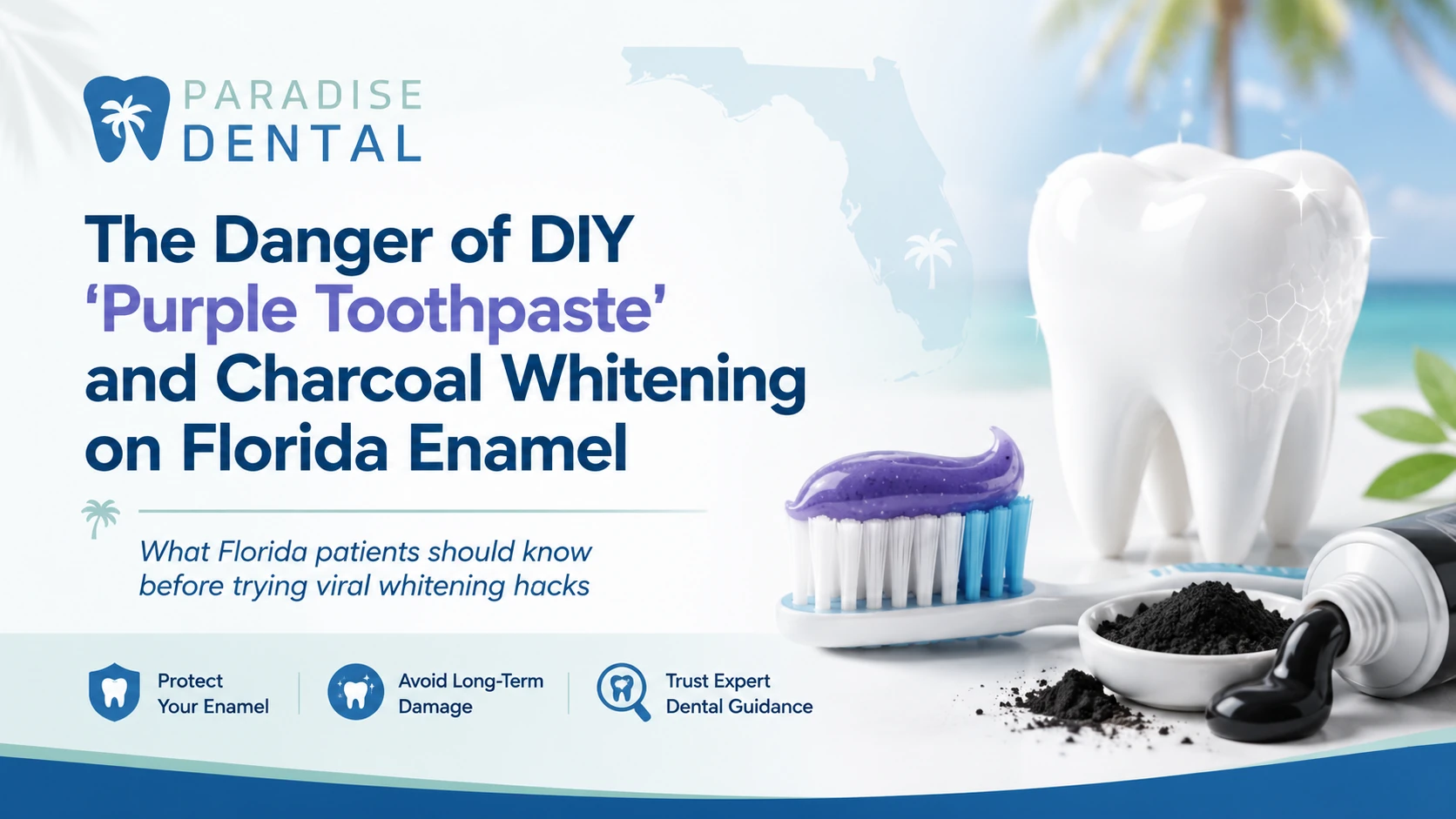
Purple toothpaste.
Black charcoal paste.
LED kits.
“Instant whitening hacks.”
Many of these products promise dramatic whitening without the cost of professional treatment.
Some patients in Bradenton and Lakewood Ranch swear by them temporarily.
Others end up with:
- severe sensitivity,
- worn enamel,
- irritated gums,
- or teeth that actually look duller over time.
The important question is not whether these products can create a short-term visual effect.
It is whether they are safe for your enamel long-term especially in Florida, where many patients already deal with enamel wear from acidic drinks, dehydration, dry mouth, and year-round citrus and sparkling beverage habits.
First: Purple Toothpaste Does Not Actually Whiten Teeth
This surprises many patients.
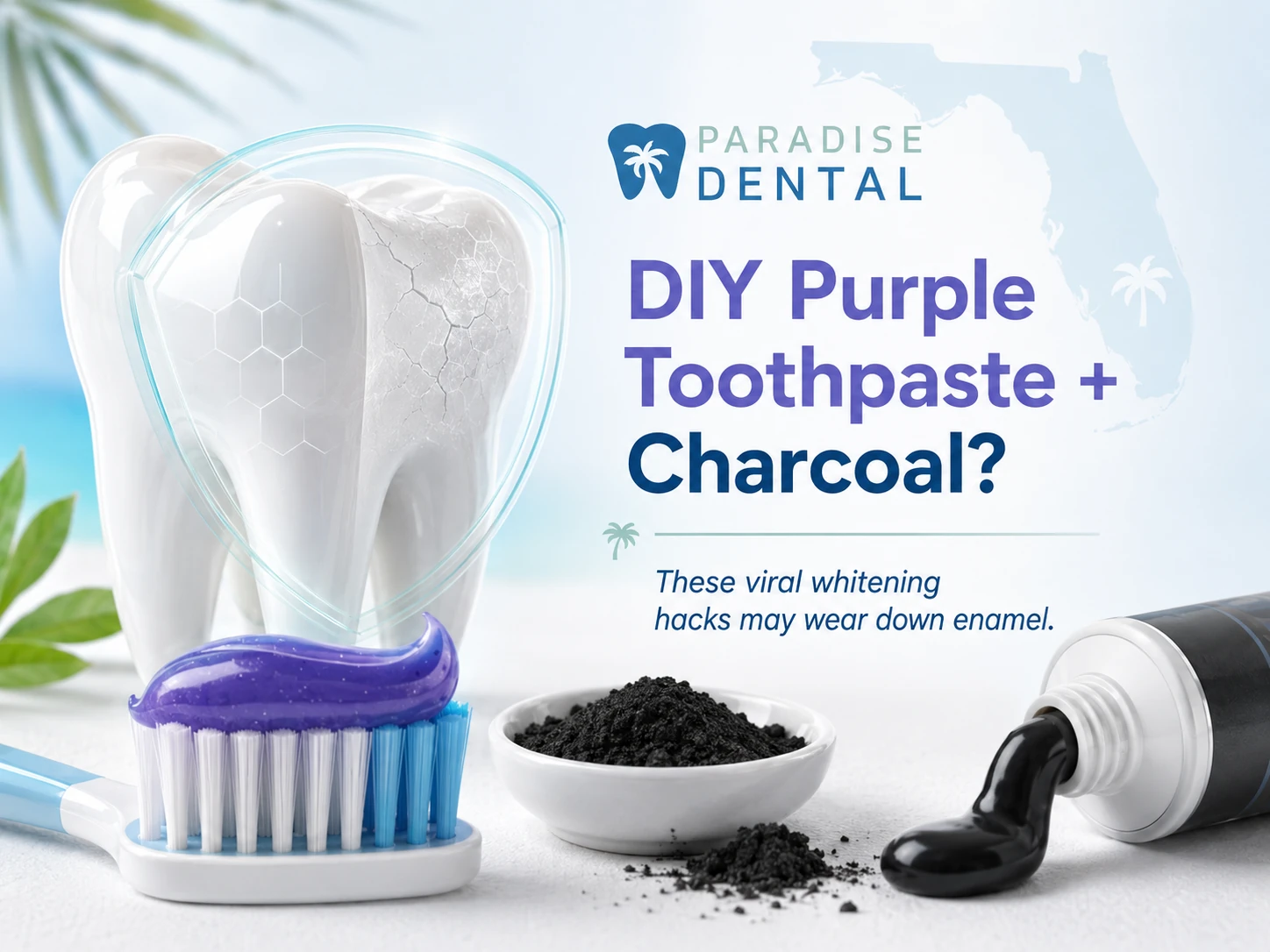
Most “purple whitening” toothpastes work through color correction, not bleaching.
They temporarily neutralize yellow tones visually using purple pigments similar to how purple shampoo works for blonde hair.
That means:
- they may make teeth appear slightly brighter briefly,
- but they do not remove deep stains,
- and they do not fundamentally whiten enamel.
For some patients, the effect is mild and harmless.
But many people mistake temporary optical brightening for actual whitening treatment.
The Bigger Problem Is Abrasion
This is where dentists become concerned.
Many trendy whitening products rely heavily on abrasive ingredients.
That includes:
- charcoal powders,
- gritty whitening pastes,
- aggressive stain-removal formulas,
- and frequent scrubbing.
The problem is that enamel does not grow back.
Once enamel thins, patients may develop:
- sensitivity,
- translucency,
- rough surfaces,
- yellowing from exposed dentin,
- and higher cavity risk.
Ironically, over-whitening efforts sometimes make teeth look darker long-term because worn enamel exposes the naturally yellower dentin underneath.
Why Florida Patients Are More Vulnerable to Enamel Wear
This is something many patients do not realize.
In Sarasota, Bradenton, and Lakewood Ranch, dentists commonly see enamel erosion related to:
- citrus-heavy diets,
- sparkling water,
- sports drinks,
- dehydration,
- reflux,
- coffee,
- and dry mouth from heat or medications.
Add abrasive whitening products on top of already stressed enamel, and problems can accelerate.
This is especially common in:
- retirees with dry mouth,
- athletes,
- coffee drinkers,
- Invisalign patients,
- and patients with grinding habits.
A patient may think:
“My teeth are getting stained.”
But sometimes the enamel itself is becoming thinner.
Charcoal Whitening Is Especially Misleading
Charcoal products are heavily marketed as “natural.”
Natural does not automatically mean safe for enamel.
Many charcoal toothpastes are highly abrasive and have little evidence supporting long-term whitening benefits.
Some also:
- scratch enamel surfaces,
- irritate gums,
- collect around dental work,
- or leave rougher surfaces that attract more stain later.
Another issue:
charcoal does not whiten crowns, veneers, fillings, or bonding.
So patients often end up with uneven coloration.
Whitening Toothpaste Is Different From Professional Whitening
This distinction matters.
Most whitening toothpastes mainly remove surface stains.
Professional whitening works differently:
- peroxide penetrates enamel,
- breaks down stain molecules,
- and lightens deeper discoloration.
That is why patients often become frustrated after months of DIY products with little meaningful improvement.
Especially if the discoloration involves:
- aging,
- internal staining,
- tetracycline staining,
- fluorosis,
- or darkened dental work.
DIY Whitening Can Mask Bigger Dental Problems
This is another issue dentists see frequently.
Patients sometimes assume discoloration is cosmetic when the real issue may be:
- enamel erosion,
- decay,
- grinding,
- cracked teeth,
- dry mouth,
- or failing dental work.
Trying stronger and stronger whitening products without understanding the cause can delay proper treatment.
For example:
a dark tooth after trauma may indicate nerve damage not simple staining.
The Lowest-Cost Whitening Option Is Not Always the Lowest-Cost Outcome
Many patients spend years trying:
- charcoal products,
- whitening strips,
- purple toothpaste,
- LED kits,
- TikTok trends,
- and whitening “hacks.”
Sometimes they end up spending more cumulatively than professional whitening would have cost initially.
More importantly, some patients create permanent enamel damage trying to avoid professional care altogether.
That does not mean every patient needs expensive cosmetic treatment.
For some people, simple over-the-counter whitening products are perfectly reasonable.
But aggressive abrasion is where problems begin.
Signs DIY Whitening May Be Damaging Your Teeth
You should stop and get evaluated if you notice:
- increasing sensitivity,
- sharp pain with cold drinks,
- translucent tooth edges,
- rough tooth surfaces,
- gum irritation,
- uneven whitening,
- or teeth appearing more yellow despite whitening efforts
Those symptoms may indicate enamel wear rather than simple staining.
So What Is the Safest Way to Whiten Teeth?
For most patients, the safest approach is:
- determine the cause of discoloration first,
- evaluate enamel health,
- choose whitening methods appropriate for the patient’s teeth,
- and avoid highly abrasive products long-term.
At Paradise Dental in Bradenton, Dr. Jeffrey Martins evaluates:
- enamel thickness,
- gum health,
- existing restorations,
- sensitivity,
- staining type,
- and whether whitening is likely to work predictably before recommending treatment.
Because whitening should improve a smile not slowly damage the enamel underneath it.
And in Florida, where enamel erosion is already common, protecting tooth structure matters just as much as improving color.